Fast Charging Vs. Ultra-Fast Charging: A NEG Technology Comparison-NEG Power
As electric vehicles (EVs) continue their global rise, the demand for efficient charging solutions grows in parallel. Charging time is a decisive factor for EV owners, fleet managers, and businesses investing in charging infrastructure. Two prominent technologies that address this need are fast charging and ultra-fast charging. NEG, a leader in the EV charging market, has engineered innovative electric car charger Singapore solutions to cater to both segments, each serving specific user demands. This article explores fast charging versus ultra-fast charging through a NEG technology comparison, helping you make informed decisions for your electric mobility goals. Understanding Fast Charging Fast charging, also referred to as DC fast charging or rapid charging, typically delivers power levels between 25kW to 100kW. It uses direct current (DC) to charge the vehicle battery directly, bypassing the onboard AC-to-DC converter, thus enabling higher charging speeds compared to conventional AC chargers. How Fast Charging Works When an electric car charger in Singapore delivers DC power, it feeds electricity straight to the EV’s battery, allowing it to reach 80% capacity in approximately 30 to 60 minutes, depending on battery size and state of charge (SOC). NEG’s range of DC fast chargers is designed with robust thermal management systems and intelligent communication protocols to optimise charging time without compromising battery health. Advantages of Fast Charging Shorter Charging Time Compared to AC Chargers Fast charging significantly reduces downtime, making EVs more practical for daily commuting and urban travel. Flexible Installation Options NEG’s fast chargers can be installed in commercial premises, shopping malls, and public parking lots with existing grid capacities supporting 30kW to 60kW outputs. Lower Infrastructure Costs Compared to Ultra-Fast Chargers Fast chargers require moderate electrical upgrades, making them cost-effective for businesses looking to provide EV charging services. Limitations of Fast Charging Longer Charging Time Compared to Ultra-Fast Charging While fast charging is ideal for city usage, longer journeys may still require longer stops compared to ultra-fast chargers. Limited Futureproofing As EV battery capacities continue to increase, fast charging may not fully match user expectations for rapid top-ups, especially for larger vehicles. Understanding Ultra-Fast Charging Ultra-fast charging refers to charging stations that deliver power outputs exceeding 150kW, with some models reaching up to 350kW. NEG’s ultra-fast electric car chargers are engineered to support modern high-voltage battery systems in premium EVs, enabling extremely rapid charging sessions. How Ultra-Fast Charging Works Ultra-fast chargers utilise advanced power modules and cooling systems to deliver exceptionally high power outputs. NEG’s ultra-fast chargers are designed with dynamic power distribution, intelligent load balancing, and active thermal management to maintain safety while delivering ultra-high power. Vehicles supporting 800V battery systems, such as certain luxury EV brands, can charge from 10% to 80% in as little as 15 to 20 minutes. Advantages of Ultra-Fast Charging Significantly Reduced Charging Times Ultra-fast chargers transform the EV charging experience to resemble traditional fuel refuelling, minimising wait times during long journeys. Enhanced Business Opportunities For businesses operating highways, petrol stations, and EV charging hubs, ultra-fast chargers attract premium EV owners seeking quick top-ups. Futureproof Infrastructure With EV battery capacities increasing, ultra-fast chargers ensure readiness to serve nextgeneration EVs without replacement. Higher ROI Potential Faster charging translates to higher throughput per charging bay, increasing revenue opportunities for charging operators. Limitations of Ultra-Fast Charging High Installation and Infrastructure Costs Ultra-fast chargers require substantial grid connections, electrical upgrades, and advanced cooling systems, raising installation costs significantly compared to fast chargers. Vehicle Compatibility Limitations Not all EVs currently on the market support ultra-fast charging. Charging an EV with limited DC input at an ultra-fast charger will not reduce charging time. NEG Technology Comparison: Fast Charging vs. Ultra-Fast Charging NEG is known for its cutting-edge engineering and practical approach to electric mobility infrastructure. Here is how NEG’s fast charging and ultra-fast charging technologies compare: 1. Power Output and Speed Fast Charging: Power Output: 30kW to 100kW Average Charging Time (20%-80% SOC): 30–60 minutes Ideal For: Urban EV fleets, public parking, retail premises Ultra-Fast Charging: Power Output: 150kW to 350kW Average Charging Time (10%-80% SOC): 15–20 minutes (depending on vehicle capability) Ideal For: Highway charging hubs, fleet depots, and EV-dedicated service stations NEG designs both charger types with intelligent software integration to ensure real-time monitoring, remote diagnostics, and seamless payment processing, regardless of charging speed. 2. Grid and Infrastructure Requirements Fast Chargers: Require moderate upgrades, often compatible with existing commercial power infrastructure. Lower peak power demand management requirements. Ultra-Fast Chargers: Require robust grid connections, often with transformer upgrades and dedicated highcapacity power lines. NEG integrates smart grid communication and energy management systems to optimise peak demand and prevent grid overloads. 3. Thermal Management Fast chargers rely on passive or moderate cooling systems to dissipate heat. In contrast, ultra-fast chargers, such as NEG’s high-capacity models, incorporate liquid cooling to maintain cable and connector safety under high current loads, ensuring user safety and charger longevity. 4. Cost Considerations Fast Charging: Lower capital expenditure, installation, and maintenance costs. Suitable for small to medium businesses investing in EV infrastructure with limited budgets. Ultra-Fast Charging: High capital expenditure due to grid requirements and cooling systems. Best suited for large-scale charging operators or government-backed highway electrification projects seeking future proof solutions. Which Charging Technology Should You Choose? Choosing between fast charging and ultra-fast charging depends on your operational needs, target user base, and budget: Businesses in Urban Areas: Fast chargers suffice for most city drivers who can top up their EVs while shopping or working. They provide sufficient speed without significant infrastructure investments. Highway Service Stations and Fleet Operators: Ultra-fast chargers deliver the shortest turnaround times, ideal for long-haul EV drivers or commercial fleets that cannot afford lengthy downtime. Futureproofing Strategy: If budget allows, integrating ultra-fast chargers prepares your infrastructure for next generation EVs, positioning your business as a premium charging provider. NEG offers consultancy to assess site readiness, optimal charger selection, and infrastructure planning, ensuring you make the right choice aligned with your business objectives. NEG’s Commitment to EV Charging Innovation Whether choosing fast charging or ultra-fast charging, NEG’s EV car charger range is designed with user safety, optimal performance, and sustainability in mind. Their chargers incorporate: Dynamic Load Management to distribute available power intelligently Smart Payment Integration for seamless user experiences Advanced Safety Features including surge protection, leakage detection, and temperature control Eco-Friendly Engineering using recyclable materials and energy-efficient designs NEG remains committed to empowering global EV adoption through reliable, safe, and fast charging solutions that meet diverse needs. Final Thoughts The debate between fast charging and ultra-fast charging reflects the dynamic needs of the electric vehicle market. Both technologies have their place in the ecosystem, and the choice ultimately depends on your location, user demand, and budgetary considerations. Fast charging provides an affordable and practical solution for everyday EV users and urban businesses, while ultra-fast charging is revolutionising long-distance travel and premium EV usage by delivering lightning-speed top-ups. NEG’s electric car charger Singapore technology leads in both segments, combining cutting-edge engineering with practical solutions to accelerate the transition to a sustainable electric future. Investing in the right charging infrastructure today ensures your business remains ahead in the rapidly electrifying world. Visits us : https://www.negpower.sg/
Read more

Beyond Solar Panels: Integrating ESS for True Renewable Energy Self-Sufficiency-NEG Power
For years, solar panels have been celebrated as the cornerstone of renewable energy adoption. By capturing sunlight and converting it into electricity, they provide homeowners, businesses, and even industries with a greener alternative to fossil fuels. Yet, while solar panels mark a vital step toward sustainability, they are not the complete answer to energy independence. The sun doesn’t shine 24/7, and fluctuations in demand often mean that renewable generation alone cannot guarantee uninterrupted power. This is where Energy Storage Systems (ESS) come into the picture. ESS bridges the gap between generation and consumption, allowing excess renewable energy to be stored and deployed when needed. Integrating ESS with solar panels — and even complementing them with technologies like the EV Charger Singapore — is redefining what true renewable energy self-sufficiency looks like. The Limitation of Solar Panels Alone Solar panels excel during sunny days, especially at peak noon hours when sunlight is abundant. However, energy consumption patterns don’t always align with solar generation. Most households, for instance, consume more electricity in the evenings when solar production has already diminished. Without a storage solution, this mismatch forces users to rely on the grid, which is often powered by fossil fuels. Furthermore, grid instability, rising electricity prices, and increasing energy demand make dependence on panels alone insufficient for achieving real autonomy. The solution lies in capturing excess solar output and storing it for later use — ensuring reliability, stability, and efficiency. What Is ESS and Why It Matters Energy Storage Systems (ESS) are designed to store electricity when production exceeds consumption and release it when the demand surpasses supply. Lithium-ion batteries, the most widely used ESS technology today, are capable of storing large amounts of energy with high efficiency. By integrating ESS with solar panels, renewable energy moves from being intermittent to being continuous. It allows homeowners and businesses to manage their energy use proactively rather than reactively. ESS ensures that the clean energy harvested during the day powers homes, offices, and even electric vehicles at night. Components of an Integrated Solar + ESS Setup Solar Panels — Harvest sunlight and generate electricity. Inverter — Converts DC (direct current) from panels into AC (alternating current) usable by household or business appliances. ESS (Battery Storage) — Stores surplus energy during high solar production. Energy Management System (EMS) — Smart software that optimizes when to store, consume, or sell back electricity to the grid. EV Charger Integration — Provides a direct pathway to use stored renewable energy for charging electric vehicles. This integration creates a self-sustaining ecosystem where renewable energy powers not only homes and businesses but also personal mobility. ESS and the Path to Self-Sufficiency Self-sufficiency in energy means generating and storing enough electricity to minimize reliance on the grid. With solar + ESS integration, users can: Power Through the Night: ESS stores daytime surplus for nighttime use. Reduce Grid Dependency: Less reliance on fossil-fuel-heavy grid energy. Save Costs: Store energy during low-demand hours and use it during peak pricing. Enable Resilience: ESS provides backup during blackouts, keeping critical systems online. True renewable independence lies not in just producing energy but in being able to control when and how it is used. ESS unlocks this potential. The Role of EV Chargers in Renewable Integration Electric vehicles (EVs) are transforming transportation, but their sustainability hinges on how they are charged. Charging an EV with grid electricity powered by fossil fuels only shifts emissions rather than reducing them. However, when solar panels and ESS are paired with an EV Charger, the equation changes dramatically. Green Charging: Instead of relying on grid electricity, EVs can be charged with stored solar power. Load Balancing: Smart EV Chargers can optimize charging times to coincide with off-peak demand or maximum solar output. Vehicle-to-Home (V2H) and Vehicle-to-Grid (V2G): Future-ready EV Chargers enable EVs to act as mobile energy storage units, feeding power back into homes or the grid when required. By integrating ESS and EV Chargers Singapore, renewable energy ecosystems extend beyond buildings and into transportation, creating a holistic sustainable lifestyle. Advances in ESS Technology As demand for renewable integration grows, ESS technology is rapidly advancing: Lithium-Ion Batteries: Currently the most popular, offering high efficiency and scalability. Solid-State Batteries: Emerging technology promising higher energy density and safety. Flow Batteries: Ideal for large-scale storage, with longer lifespans and easy scalability. Hybrid Systems: Combining different storage technologies to balance cost, performance, and durability. Each innovation pushes renewable adoption closer to mainstream, affordable energy independence. Smart Energy Management: The Brain of the System Energy self-sufficiency isn’t only about storage — it’s also about optimization. Smart Energy Management Systems (EMS) are critical in orchestrating when solar energy should power appliances, charge ESS, or supply the EV Charger. Features of EMS include: Predictive Usage: Algorithms anticipate consumption patterns and weather forecasts. Dynamic Control: Automatically adjust loads to maximize efficiency. Grid Interaction: Decides when to feed surplus energy back to the grid for incentives. This intelligence ensures users get maximum benefit from their renewable setup. Benefits for Homeowners and Businesses For Homeowners Lower utility bills through reduced grid reliance. Reliable backup during power cuts. Sustainable EV charging with home-based renewable sources. Increased property value as energy-efficient homes are in demand. For Businesses Operational continuity with backup during outages. Predictable energy costs, reducing exposure to rising electricity prices. Corporate sustainability goals achieved with measurable carbon footprint reduction. Ability to integrate renewable-powered EV Chargers for company fleets. Policy and Market Support Driving ESS Adoption Governments worldwide are recognizing the transformative role of ESS in renewable adoption. Incentives such as subsidies, tax credits, and favorable net-metering policies are driving adoption. Businesses and individuals investing in ESS often benefit from lower payback periods and higher ROI thanks to these initiatives. At the same time, the falling cost of battery technology is making ESS more accessible. Just as solar panels became affordable over the last decade, ESS is on a similar trajectory. The Road Ahead: Toward True Energy Independence As energy demand grows and climate concerns intensify, the future will increasingly lean on integrated renewable ecosystems. Solar panels may be the starting point, but ESS ensures continuous reliability. With the addition of smart technologies like EV Chargers, renewable energy doesn’t just stop at powering homes — it powers mobility, businesses, and even entire communities. True self-sufficiency isn’t about cutting off the grid entirely but about reducing dependence while maximizing autonomy. By combining solar panels, ESS, and EV Chargers Singapore, individuals and businesses can finally take full control of their energy future. Solar panels alone laid the foundation for clean energy adoption, but the path to complete renewable independence requires more. Energy Storage Systems (ESS) transform intermittent solar into a stable, reliable source of electricity. When paired with smart energy management and integrated with technologies like the EV Charger, ESS takes renewable adoption to the next level. The future of energy lies in synergy. Solar panels generate, ESS stores, and EV Chargers Singapore extend this power into transportation. Together, they redefine sustainability — not just as an environmental choice but as a practical, economical, and resilient way of living. Beyond solar panels, integrating ESS is the key to true self-sufficiency — ushering in an era where clean energy isn’t just an option but a complete lifestyle. Visits us : https://www.negpower.sg/
Read more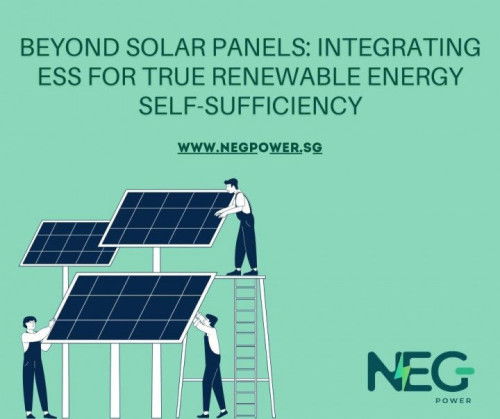
Why is it that my husband keeps prioritizing his family and their advices over mine? What am I then?
I was wondering how should i approach him on this matter. He is very short tempered and quickly taken aback if i mentioned about his family especially mother. I'm so sick and tired of that old lady. She also has the habit of complaining to my husband about anything that has got to do with me in it. Whatmore, my husband will be bringing her over to stay with us when we get a house later but don't know when. Zzz. Where is my full privacy then?! #latenightrant
Read more
Top Website Maintenance Tasks Every Singapore Business Should Know — Subraa
Website maintenance isn’t just about updating a plugin or refreshing a few photos. It’s a structured, strategic process that ensures your site stays functional, secure, and competitive. Here’s a quick breakdown of what smart website maintenance includes: ● Software & Plugin Updates: Platforms like WordPress need regular updating to avoid vulnerabilities. ● Security Checks: Malware scanning, firewall setup, and monitoring are must-haves in today’s cyber-threat landscape. ● Speed Optimization: Compressing images, minimizing scripts, and using caching tools keep your website fast. ● Mobile & Browser Testing: With so many devices and browsers in use across Singapore, compatibility testing is critical. ● Content Refresh: Updating service pages, blogs, or portfolios helps SEO and keeps your audience interested. These aren’t just tech tasks, they’re direct revenue protectors. Many small businesses in Singapore assume cyberattacks only happen to big corporations. Wrong. In fact, small and medium-sized businesses are often targeted because they lack ongoing website maintenance and security. If your website isn’t regularly updated, hackers can exploit outdated code, unpatched plugins, or simple backdoor vulnerabilities. Website maintenance helps by: ● Keeping your CMS and plugins updated ● Installing firewalls and malware protection ● Running regular security scans ● Backing up your site regularly, so you can recover quickly if something goes wrong Skipping these basics could lead to data loss, website defacement, or even legal trouble, especially if you’re collecting customer information. Whether you’re working with an agency or a freelance web developer Singapore, make sure you know what’s included in their website maintenance scope. You deserve transparency and reliability. Visit our site :** censored link ** #freelancewebdeveloperSingapore #websitemaintenance #ongoingwebsitemaintenance
Read more

Why Website Maintenance in Singapore Is a Smart Long-Term Investment — Subraa
Your website is your brand’s digital storefront. Like any shop on Singapore’s bustling Orchard Road or CBD, it requires regular upkeep to remain appealing, secure, and effective. Many businesses invest heavily in web design in Singapore, but once the site goes live, they disappear. Big mistake. Ongoing website maintenance ensures your site performs well, stays secure, and remains Google-friendly. It’s not just tech housekeeping, it’s a strategic growth tool. Think about this: Your site’s loading speed, mobile responsiveness, broken links, or outdated content can quietly destroy conversions. Search engines pick up on these signals, and your rankings take a hit. A well-maintained website: ● Loads faster ● Is less vulnerable to hackers ● Keeps users engaged ● Supports long-term SEO performance The best part? You don’t need a massive agency for this. A freelance web designer in Singapore often offers maintenance plans that are budget-friendly and personalized — something big firms struggle to match. The great thing about working with a freelance web designer in Singapore is flexibility. Most offer ongoing support packages that scale with your needs — whether you’re a startup with a 5-page website or an SME with e-commerce integrations. Some even offer: ● Monthly reports ● SEO audits ● Content update services ● Priority support for urgent issues Plus, since many freelancers were involved in your site build, they know your setup well and can troubleshoot faster. Maintenance Isn’t Optional, It’s Smart Business In Singapore’s highly competitive online market, maintaining your website is no longer optional. It’s not an “extra” service or a “nice-to-have” — it’s a non-negotiable investment in your digital future. Whether you’re running a small local business or a growing e-commerce store, regular website maintenance ensures: ● Maximum performance ● Stronger security ● Better SEO ● Happier users ● More sales The digital world never sleeps, and neither should your website’s upkeep. Visit our site : ** censored link ** #Ongoingwebsitemaintenance #freelancewebdesignerinSingapore
Read more
Liquid Cooling in DC Chargers: Why It Matters for High Power Charging — Neg Power
As electric vehicles (EVs) become more mainstream, the demand for fast, efficient, and safe Singapore EV charger infrastructure has skyrocketed. One key technology enabling high speed charging — especially for next-generation EVs with larger battery capacities — is liquid cooling in DC fast chargers. This article explores why liquid cooling matters, how it works, and what it means for the future of high-powered charging systems. Understanding DC Fast Charging DC (Direct Current) fast charging is currently the fastest way to recharge an electric vehicle. Unlike AC (Alternating Current) charging, where power is converted in the vehicle’s onboard system, DC fast chargers convert AC to DC at the charger itself, allowing power to bypass the vehicle’s internal converter and go directly into the battery. This dramatically reduces charging time. While AC chargers may take hours to fully charge an EV, DC fast chargers can provide up to 80% charge in under 30 minutes, depending on the power output and battery size. The Push Toward Higher Power Early DC chargers offered 50kW, but newer models support ultra-fast charging ranging from 150kW to 350kW and beyond. Some future-oriented EV charger systems even aim to support power levels up to 500kW to accommodate heavy-duty EVs and commercial fleets. However, with such high output comes a significant engineering challenge: heat. The Heat Challenge in High-Powered EV Chargers Electricity generates heat when it passes through conductors — especially at high currents. In high-power DC chargers: Cables, connectors, and internal components experience rapid temperature increases. Overheating can cause component failure, safety hazards, and performance throttling. Heat also degrades materials over time, reducing the lifespan of the Singapore EV charger. To ensure efficiency, safety, and longevity, managing heat becomes critical — particularly when delivering over 200kW to a single vehicle. Why Liquid Cooling Is Essential Enter liquid cooling technology — an innovation that addresses thermal management challenges in ultra-fast Singapore EV chargers. Liquid cooling uses a coolant (typically a water-glycol mixture) to actively extract heat from power electronics, cables, and connectors. This method is significantly more efficient than air cooling, especially when dealing with the intense thermal loads of high-power systems. Key Benefits of Liquid Cooling: Supports Higher Currents With proper liquid cooling, charging cables can safely handle currents above 500 amps, enabling ultra-fast charging without overheating. Compact Cable Design Air-cooled high-power cables are bulky and heavy. Liquid-cooled cables are lighter, thinner, and easier to handle, improving the user experience. Enhanced Safety Lower operating temperatures reduce the risk of burns, equipment damage, or fire hazards. Increased Charging Speed Heat buildup often causes systems to throttle charging speeds. Liquid cooling keeps systems within safe operating limits, maintaining maximum power output longer. Improved Reliability Consistent temperature control means less thermal stress on components, leading to longer equipment lifespan and reduced maintenance costs. How Liquid Cooling Works in EV Chargers The basic principle of liquid cooling in EV charger systems is simple: heat is absorbed by a liquid coolant and transferred to a heat exchanger or radiator where it is dissipated. Major Components Include: Coolant-embedded charging cables: Designed with internal fluid channels. Pumps and reservoirs: To circulate coolant continuously. Heat exchangers: Transfer heat from the coolant to the environment. Sensors and controllers: Monitor temperature and regulate flow rates. This closed-loop system ensures that every part of the charger stays within its thermal safety limits, even during continuous high-power sessions. Use Cases Requiring Liquid Cooling While liquid cooling may seem like an advanced option, it’s becoming essential for: Public EV fast-charging stations on highways or transit hubs. Fleet depots where commercial EVs (e.g., buses, trucks) are charged rapidly and frequently. Battery swapping stations where high-speed recharging of standby batteries is needed. Urban areas with high traffic and frequent charger usage, where cooling efficiency ensures charger availability and uptime. In short, anywhere ultra-fast charging is deployed, liquid cooling becomes more than a luxury — it’s a necessity. Environmental Considerations Some may worry that liquid cooling systems might pose environmental risks, especially regarding leaks or coolant disposal. However: Most modern coolants are non-toxic and biodegradable. Systems are built to be sealed and low-maintenance. Regular diagnostics and leak detection sensors minimize risk. Liquid-cooled Singapore EV charger systems are also more energy efficient, reducing overall power loss due to heat and improving system sustainability. The Future of High-Power Charging With more EVs being released with larger batteries and faster charging capabilities, infrastructure must keep pace. Automakers are moving toward 1000V architecture in EVs, which will demand charging systems capable of supplying high voltages and currents safely and reliably. Liquid cooling will be a foundational technology enabling: Shorter charging times (under 10 minutes for 80% charge) Expansion of heavy-duty EV fleets (trucks, buses, delivery vans) Mass deployment of public charging infrastructure Smarter thermal load balancing in Singapore EV charger networks Conclusion As we enter a new era of electric mobility, the ability to deliver massive amounts of power quickly, safely, and sustainably is key. Liquid cooling is not just a technical add-on — it’s a strategic enabler of high-powered EV charging. From managing intense heat loads to supporting future-proof infrastructure, liquid-cooled \ EV chargers in Singapore will be essential in meeting the evolving needs of drivers, fleet operators, and energy providers alike. When selecting or deploying an EV charger for high-power applications, make sure it incorporates liquid cooling technology. It’s not just about speed — it’s about safety, performance, and long-term value. Pop over here : https://www.negpower.sg/ev-charger-ac-dc/
Read more